
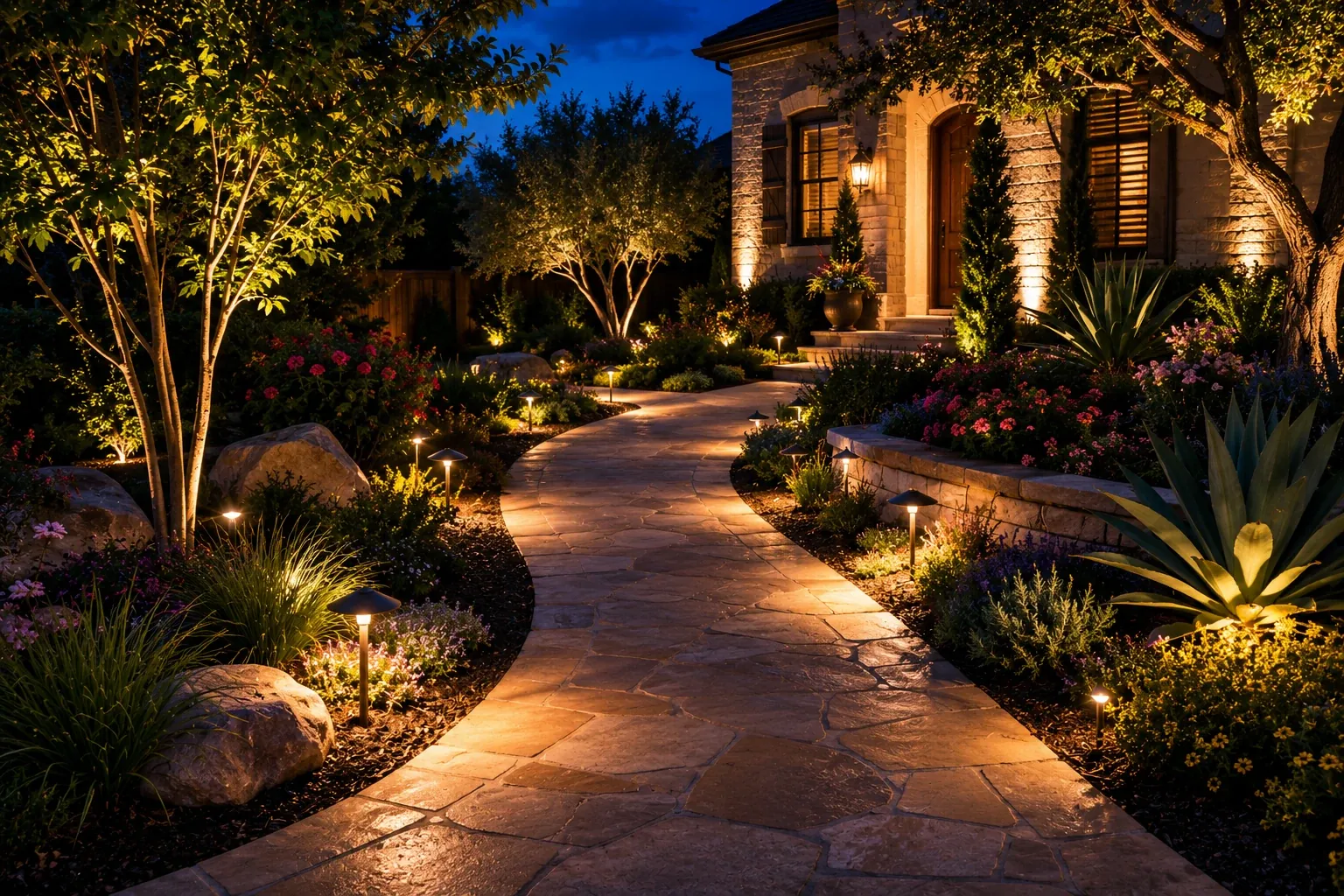
Repair, Retrofits & Annual Care
Landscape Lighting Maintenance & Repair
Landscape lighting repair and maintenance for any brand of system: we find out why lights are dark or flickering, fix the wiring and transformers, retrofit old halogen fixtures to LED and keep everything aimed and clean year after year.
Any system, any installer
Landscape Lighting Repair That Finds the Real Problem
When landscape lighting fails, the symptom is rarely the cause. A dark run of path lights might be a nicked cable under a flower bed; dim fixtures at the end of a run point to voltage drop; a whole system that goes out after rain usually means a failing connection or a tripped GFCI. Good landscape lighting repair and maintenance starts with testing, not guessing.
Landscape Lighting Texas services systems we installed and systems we didn’t, from any manufacturer. We check the transformer, measure voltage at the fixtures, trace and repair wiring, replace broken fixtures, and put the design back the way it was meant to look, or better.
What we fix
Common Landscape Lighting Problems We Repair
Texas weather, growing landscapes and time are hard on outdoor lighting. These are the issues we see most.
Whole system out
Tripped GFCI outlets, failed transformers, blown fuses or breakers, a dead photocell or a timer that lost its program after a power outage.
One run dark
Usually a cut or corroded cable, often from aeration, edging, new plantings or a fence post. We locate the break and repair it with sealed, direct-burial splices.
Dim or uneven lights
Voltage drop on long or undersized runs, an overloaded transformer or daisy-chained wiring. Fixes include re-tapping, hub wiring or heavier 12- or 10-gauge cable.
Flickering fixtures
Loose or corroded connections, failing lamps or incompatible LED drivers. Humidity and irrigation make Texas connections a frequent culprit.
Lights aimed wrong
Fixtures knocked by mowers, buried by mulch or swallowed by shrubs, and uplights that no longer fit a tree that has grown several feet. We re-aim and relocate.
Storm & hail damage
Cracked lenses, broken stakes and bent fixtures after storms. We replace what is damaged and recommend tougher brass or copper fixtures where hail is common.
LED retrofits
Upgrading Halogen Landscape Lighting to LED
If your system still uses halogen lamps, an LED retrofit is usually the single best upgrade you can make.
LED landscape lighting uses roughly 75–80% less energy than halogen, runs much cooler and lasts far longer between lamp changes. For many older systems, that means lower running costs, less maintenance and a more consistent look across the property.
There are two ways to retrofit. Where the existing fixtures are solid brass or copper and in good condition, we can often install LED replacement lamps in the original housings. Where fixtures are worn, corroded or plastic, replacing them with integrated LED fixtures gives better optics and longer life. Either way, we check the transformer, recalculate the load and re-tap so the new lamps get the right voltage.
See what you might save with the LED energy savings calculator, or read LED vs halogen landscape lighting for the full comparison.
| Halogen system | After LED retrofit | |
|---|---|---|
| Energy use | Baseline | About 75–80% less |
| Lamp changes | Frequent | Far less often |
| Heat at the fixture | High | Low |
| Transformer load | Often near capacity | Room to add fixtures |
| Color options | Fixed warm white | 2700K, 3000K, tunable or color |
| Smart control | Limited | Ready for zoning and dimming |
See the difference
Before and After: A Restored Lighting System
Drag the slider. Many properties already have the fixtures; they just need repair, cleaning and re-aiming to look right again.
Without lightingWith Landscape Lighting
Annual maintenance plan
What an Annual Landscape Lighting Maintenance Visit Covers
Landscapes grow, mulch piles up and Texas weather wears on connections. A yearly visit keeps the system performing the way it did on reveal night. A typical maintenance visit includes:
- Testing every zone and measuring voltage at the transformer and at the fixtures
- Cleaning lenses of dust, hard-water spots from irrigation and debris
- Re-aiming and re-leveling fixtures, and moving uplights as trees grow
- Trimming foliage away from fixtures and clearing mulch and soil
- Inspecting and resealing connections, and replacing failed lamps
- Resetting timers and astronomical schedules, and checking smart controls
- A short report on anything that needs attention before it fails
Plan pricing depends on the size of the system and is quoted after an initial evaluation. Prefer to handle some of it yourself? Use our seasonal maintenance checklist.
Texas conditions
Why Texas Systems Need Regular Care
- Heat
- Hail
- Storms
- Humidity
- Salt air
- Clay soil
- Caliche
- Fast growth
Heat breaks down plastic housings and cheap connectors. Hail and storms crack lenses and knock fixtures over. Humidity and coastal salt corrode exposed splices, especially around Houston and the Gulf Coast. Expanding clay soil and rocky caliche shift stakes and pull on wires, so fixtures drift out of aim. And a long growing season means shrubs can bury a path light in a single summer.
If your HOA has rules on outdoor lighting, a maintenance visit is also a good time to make sure fixtures are still shielded and aimed where they should be.
How it works
Our Repair & Maintenance Process
The same four steps as a new project, adapted for an existing system.
Free dusk evaluation
We see the system running at night, note what is dark, dim or misaimed, and talk through what you want it to look like.
Diagnosis & plan
We test the transformer, circuits and fixtures, find the causes and give you an itemized quote for repairs, retrofits or an annual plan.
Expert repair
Licensed, insured technicians repair wiring, replace failed components, retrofit to LED and correct voltage problems, protecting your plantings as they work.
Reveal & tune
We return after dark to re-aim, balance brightness and reset your schedule, so the whole system looks finished again.
FAQ
Frequently Asked Questions
Do you repair landscape lighting systems you didn’t install?
Yes. We service landscape lighting from any brand and any installer. We test the system, explain what we find and recommend the most practical fix, whether that is a repair, an upgrade or a partial redesign.
Why are only some of my landscape lights out?
When one section is dark, the cause is usually a damaged cable or a failed connection on that run. If lights are on but dim toward the end of a run, voltage drop is the likely cause. Our low-voltage lighting guide explains how runs are wired.
Is it worth converting halogen landscape lighting to LED?
In most cases, yes. LEDs use about 75–80% less energy, need far fewer lamp changes and run cooler. If your fixtures are in good condition, LED replacement lamps can be a cost-effective path; worn fixtures are often better replaced with integrated LED models.
How often should landscape lighting be maintained?
We recommend a professional check at least once a year, with quick homeowner checks each season: clean lenses, pull back mulch and plants and confirm the timer after power outages or time changes.
Can you add fixtures or smart controls during a repair visit?
Yes. Repairs and retrofits are a good time to extend coverage or add smart controls. An LED retrofit often frees up transformer capacity for new fixtures.
Keep exploring
Explore Other Services
Ready to expand once your system is working again?
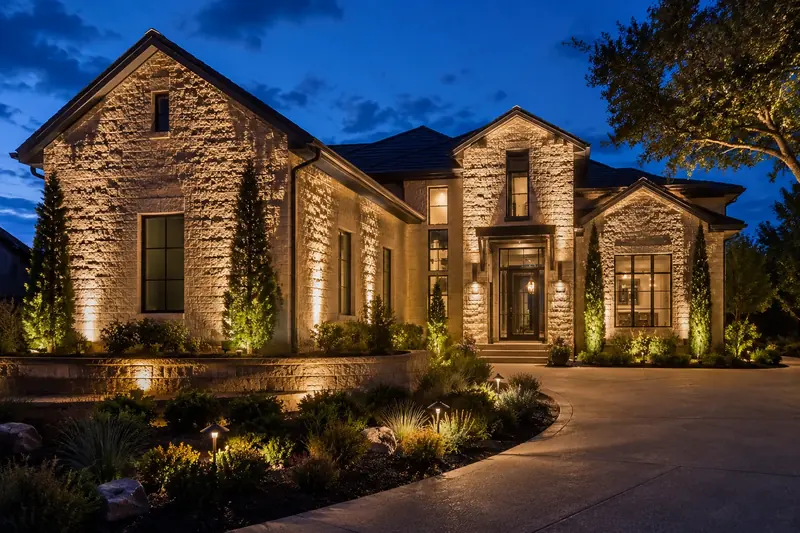
Architectural Uplighting
Grazed stone, lit columns and balanced facades that give your home presence after dark.
Explore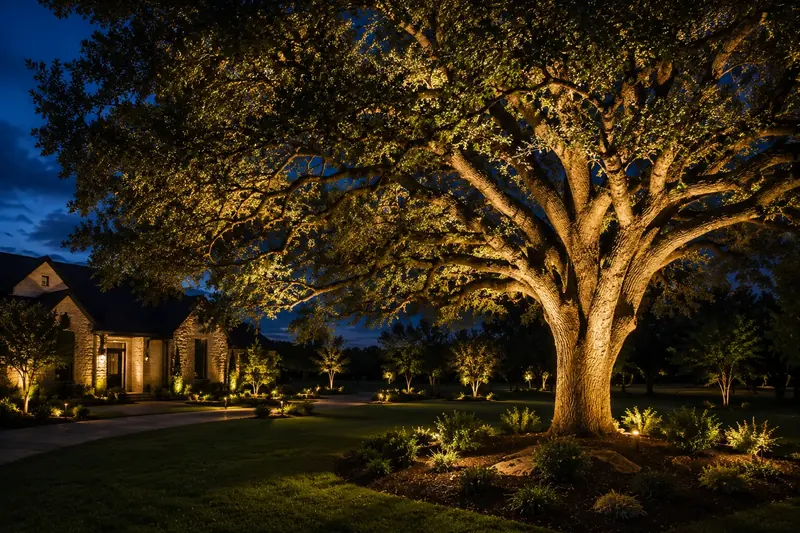
Garden & Tree Lighting
Moonlit live oaks, glowing crape myrtles and planting beds with real depth.
Explore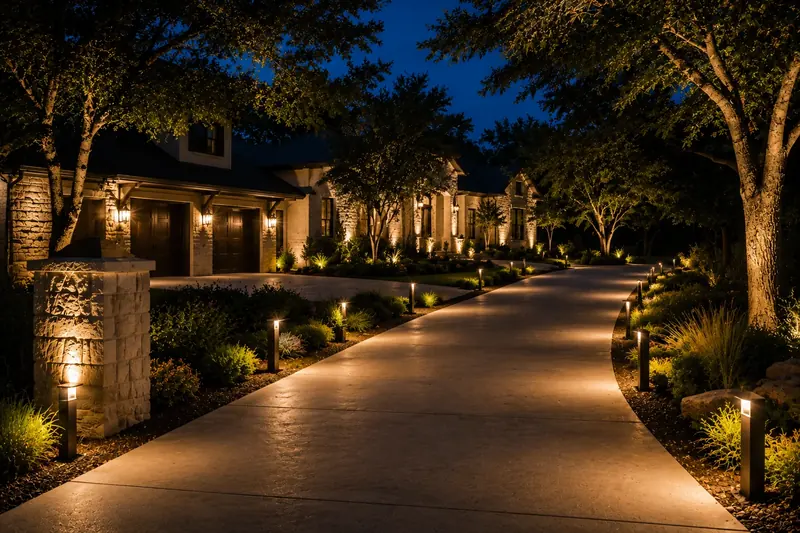
Pathway & Driveway Lighting
Soft pools of light that guide guests from the curb to the door, safely.
Explore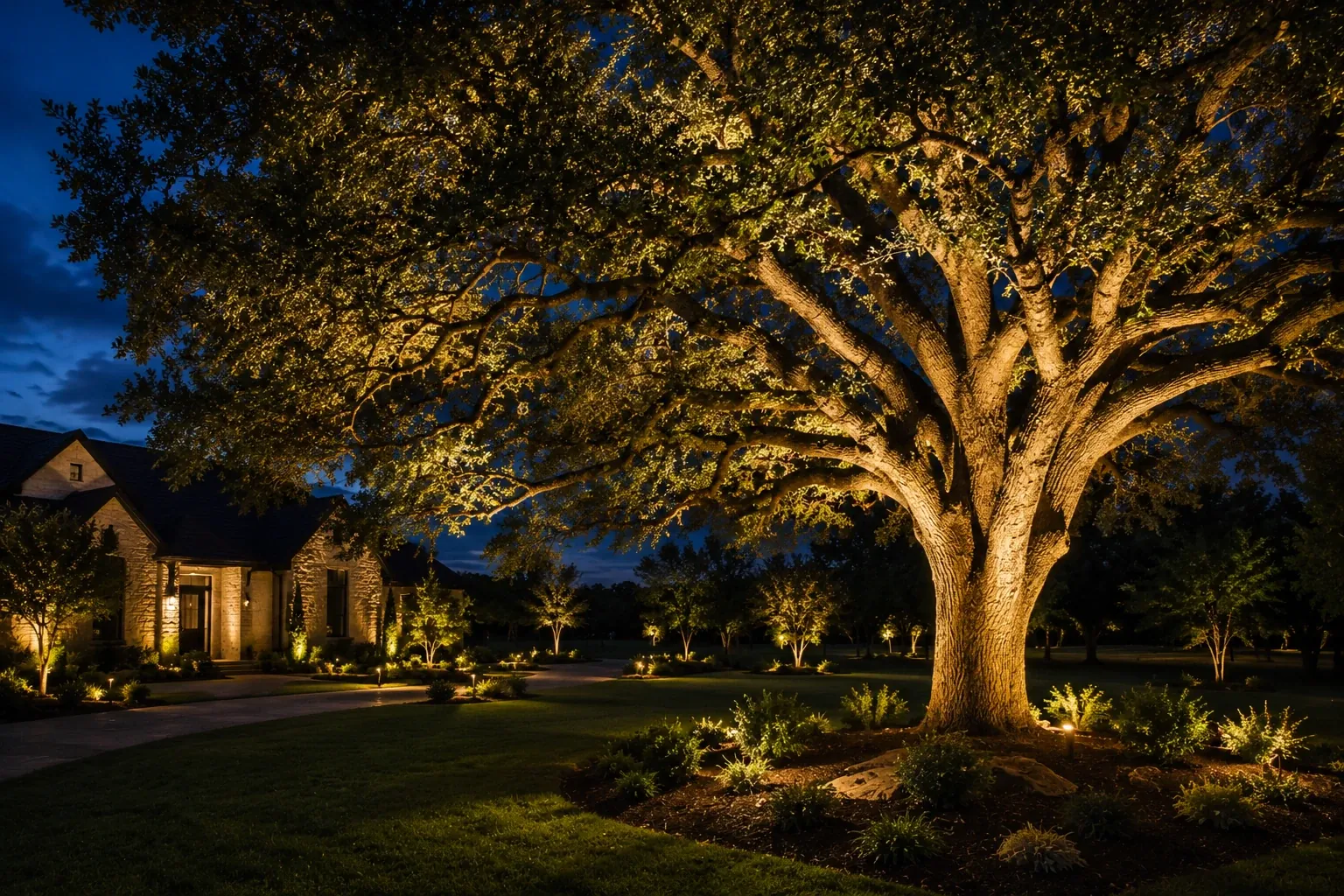
Free Consultation
Get Your Lights Back On
Tell Landscape Lighting Texas what’s happening with your system. We’ll evaluate it at dusk and send a clear, itemized repair or retrofit quote.