Landscape Lighting Color Temperature Guide
Color temperature is the quiet decision that makes or breaks a lighting design. This landscape lighting color temperature guide explains what Kelvin numbers mean, how 2200K through 5000K look on a real Texas home, and which choice suits limestone, brick, stucco, trees and water. Get it right and the whole property feels warm and inviting. Get it wrong and even expensive fixtures look harsh or mismatched.
What color temperature means
Color temperature describes how warm or cool white light looks, measured in Kelvin (K). Lower numbers look warmer, more amber and candle-like. Higher numbers look cooler, whiter and eventually bluish.
- 2200K is close to candlelight or an old-fashioned filament bulb.
- 2700K matches the warm glow of a classic halogen landscape lamp.
- 3000K is a soft, clean warm white.
- 4000K is a neutral white, common in offices and parking lots.
- 5000K is a cool, daylight white with a blue cast at night.
Kelvin describes the look of the light, not its brightness. A 2700K fixture and a 4000K fixture can put out the same lumens. At night, though, our eyes are more sensitive to cooler light, so cool fixtures often feel brighter and harsher than their numbers suggest.
2200K vs 2700K vs 3000K vs 4000K vs 5000K
| Color temperature | Look at night | Best for | Avoid for |
|---|---|---|---|
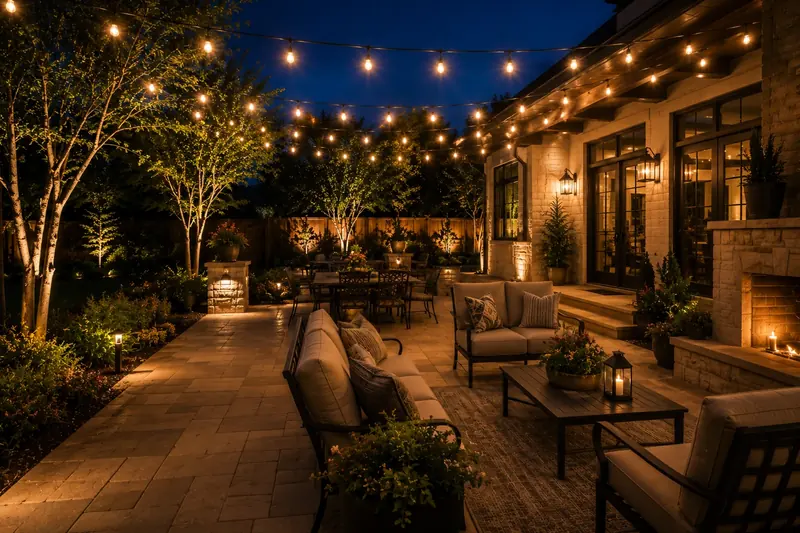
| 2200K | Candle-warm amber | String lights, rustic and Spanish-style homes, dark-sky areas | White stucco, blue-green plants |
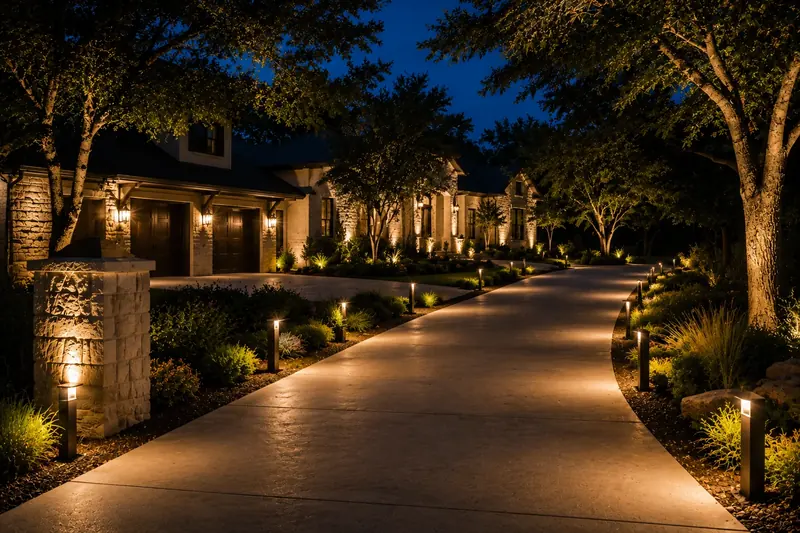
| 2700K | Warm white, halogen-like | Limestone, Austin stone, red brick, live oaks, most homes | Very cool modern palettes |
| 3000K | Soft warm white, slightly crisper | White stucco, painted brick, modern homes, outdoor kitchens | Very warm brick that turns pinkish when cool |
| 4000K | Neutral white | Some commercial sites, silver-leaf plants, security zones | Most residential facades and trees |
| 5000K | Cool daylight, bluish | Rarely suited to landscape lighting | Homes, trees, dark-sky areas |
For most Texas homes the real decision comes down to 2700K or 3000K, and it is the question Landscape Lighting Texas designers hear most often. Both read as warm white; 2700K is cozier and richer on warm materials, while 3000K is a touch cleaner on light and white surfaces.
Try it: Color Temperature VisualizerDrag from candle-warm 2200K to cool 5000K and see the difference.Best color temperature by material
Limestone and Austin stone
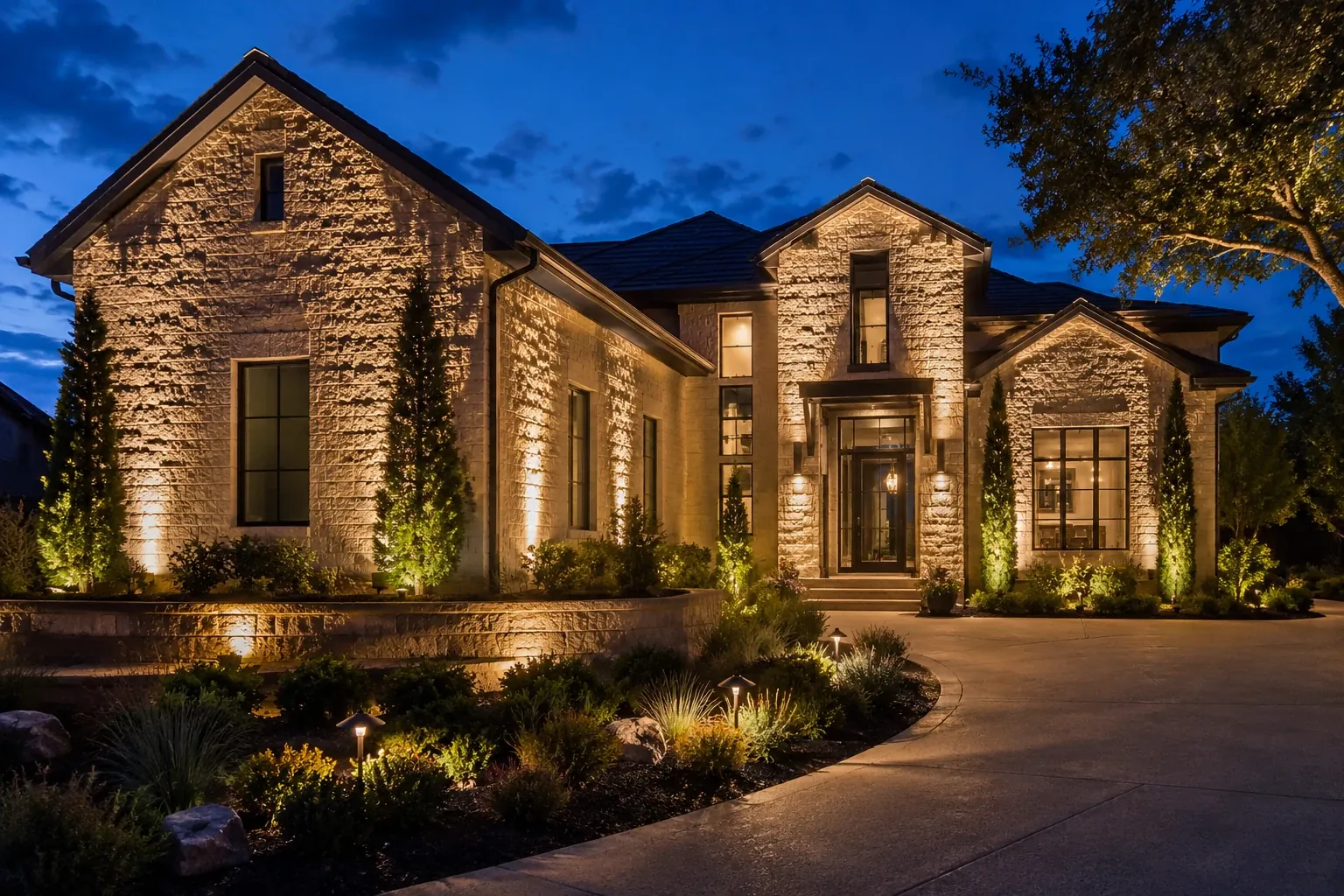
Texas limestone has cream, honey and buff tones. 2700K warms those tones and makes the texture glow when grazed with a narrow beam. Cooler light can make limestone look gray or chalky. Our architectural uplighting service covers grazing techniques in detail.
Red and brown brick
Red brick looks rich and inviting under 2700K. Under 4000K and above it can turn dull and slightly pink. For painted white brick, 3000K is usually the better choice, because it keeps the paint looking clean rather than yellow.
Stucco
White and light stucco can look yellow under very warm light. 3000K keeps it crisp while still feeling warm. Earth-toned or tan stucco often suits 2700K. Test both on your wall at dusk before you commit.
Trees and foliage
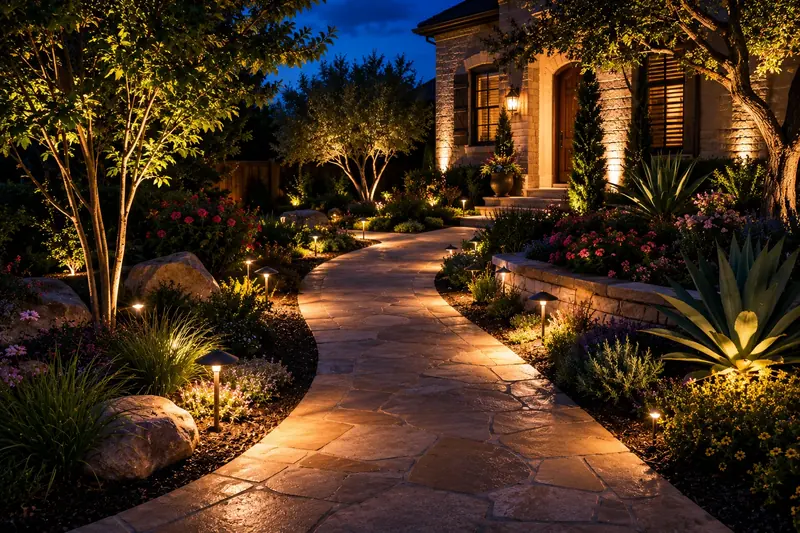
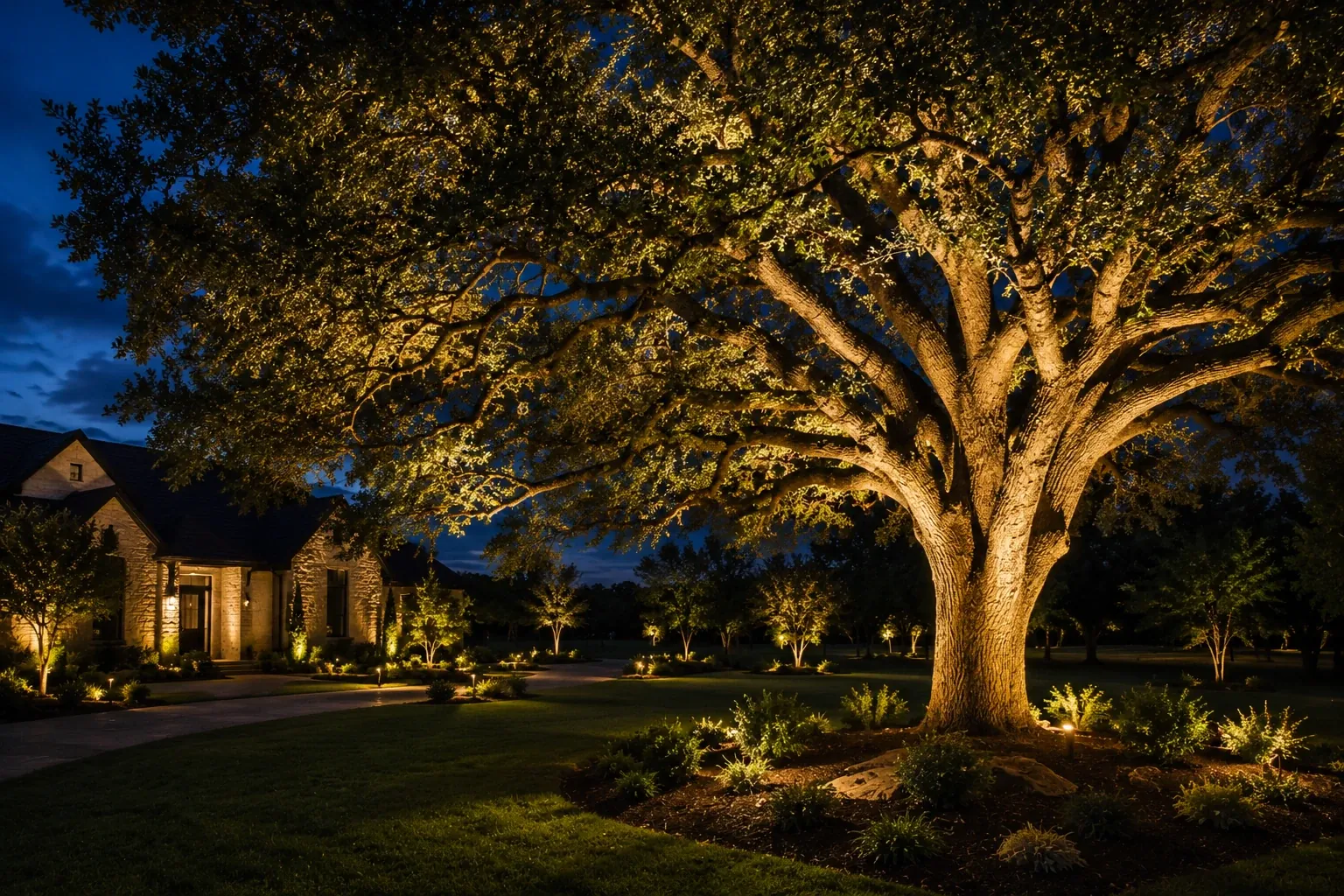
For live oaks, cedar elms and most green foliage, 2700K brings out bark texture and rich green tones. Plants with blue-gray or silver leaves, such as agave, Texas sage or olive, can look striking at 3000K, and occasionally a single 4000K accent on a silver specimen plant works. Keep any cooler accent subtle. Our guide to how to light live oak trees covers tree-specific choices.
Water
Pool water already looks blue-green from the pool light, so the surrounding landscape usually looks best at 2700K–3000K for contrast. Submerged fountain and pond lights are often fine at 3000K, which keeps the water clear and sparkling without turning it icy.
Consistency and binning
Not every "2700K" LED is the same. Manufacturers sort LED chips into bins by their measured color, and lower-quality fixtures may come from wider bins. The result is fixtures that look slightly pink, green or yellow side by side, even though the box says the same number.
- Choose fixtures from one manufacturer and one product line for each area.
- Look for tight color tolerance; quality brands specify a 3-step MacAdam ellipse or better.
- When replacing or adding fixtures later, match the original brand and color temperature.
- Avoid mixing old halogen lamps with new LEDs in the same view.
CRI: how true colors look
Color Rendering Index (CRI) measures how accurately a light source shows colors compared with natural light, on a scale up to 100. Cheap LEDs can sit in the low 80s or below, which makes foliage look dull and brick look muddy. For landscape lighting, look for a CRI of 90 or higher. High-CRI fixtures show the true red of brick, the cream of limestone and the green of leaves, and they make the same lumens look better.
Dark-sky and wildlife-friendly warm light
Texas has some of the darkest skies in the country, especially in the Hill Country and West Texas, and several communities have adopted dark-sky lighting rules. Warm light is part of the solution. Light at 3000K and below contains less blue light, which scatters more in the atmosphere and affects insects, birds and other wildlife more than warm light.
- Use 2700K or warmer in rural and Hill Country settings; 2200K suits very dark sites.
- Shield every fixture and aim it at its target, not the sky.
- Use the lowest output that does the job, and dim zones late at night.
- Put zones on timers so lights turn off when nobody is outside. The Texas Dusk Timer helps set schedules.
Regional considerations across Texas
The same Kelvin number can feel different depending on where you live and what surrounds your home.
- Hill Country and Central Texas. Limestone, live oaks and dark rural skies all point to 2700K, or 2200K on very dark acreage. Several Hill Country communities encourage or require dark-sky friendly lighting.
- Houston and the Gulf Coast. Humid air scatters light, so cooler fixtures can look hazy. Warm 2700K–3000K keeps palms, pools and lush beds looking natural.
- Dallas–Fort Worth. Red and brown brick is common, and 2700K flatters it. Newer modern builds with white brick or stucco often look sharper at 3000K.
- West Texas. Desert plantings with silver and blue-gray foliage can take 3000K well, while wide-open night skies reward warm, well-shielded light.
How to test color temperature on your home
Photos and product swatches only go so far. The most reliable way to choose is to see the options on your own walls and plants after dark.
- Test at full dark, not dusk. Light looks different against a bright evening sky than it does at 9pm.
- Compare side by side. Place a 2700K and a 3000K fixture a few feet apart on the same wall or tree.
- View from where it matters. Look from the street, the driveway and the patio, not just up close.
- Check your paint and stone colors. Warm whites can push cream paint toward yellow and gray paint toward beige.
- Think about the whole property. The choice for the facade should work for the trees and paths too.
If you are replacing old halogen lamps, remember that most halogen landscape lamps sit near 2700K–2900K. Choosing 2700K LEDs keeps the familiar look while cutting energy use by roughly 75–80%. Our LED vs halogen comparison covers the switch in detail.
Color-changing RGBW fixtures: when to use them
RGBW fixtures combine red, green, blue and white LEDs, so you can choose any color or dial a white from warm to cool. They are tempting, but most of the time a well-designed warm white system looks better and costs less.
Color-changing fixtures make sense for:
- Holidays and events. Red and green for Christmas, orange for fall, team colors on game day.
- Pools, fountains and water features. Color scenes look natural in water.
- Tunable white. Adjusting from 2700K to 3000K to match a new paint color or a change in plants.
For everyday use, set RGBW fixtures to a warm white that matches the rest of your system. Make sure any tunable fixture still offers good CRI in its white mode. Our smart lighting systems service sets up color scenes, schedules and app control so you can switch between everyday and celebration modes.
Frequently Asked Questions
Is 2700K or 3000K better for landscape lighting?
2700K is best for most Texas homes with limestone, brick and lots of trees. 3000K is better for white stucco, painted brick, modern architecture and outdoor kitchens. Both are warm whites; the difference is subtle but noticeable side by side.
Can I mix color temperatures in one landscape?
Use one main color temperature for consistency. Small, deliberate exceptions, such as 2200K string lights on a patio or 3000K over an outdoor kitchen, work when they sit in separate areas.
Why do my LED landscape lights look different colors?
Usually it is a mix of brands, LED binning differences or older lamps next to newer ones. Replacing mismatched lamps with fixtures from the same product line and color bin fixes it.
Is 4000K too bright for landscape lighting?
4000K is not brighter in lumens, but it looks harsher at night and is less dark-sky friendly. It rarely suits homes or trees and is best kept to specific commercial or security applications.
Still unsure which color temperature fits your home? Landscape Lighting Texas offers free dusk consultations, so you can see warm and cooler options on your own home before anything is installed. Request your free quote and we will help you choose the right light. You can also explore more ideas in our 25 landscape lighting ideas for Texas homes.

Our lighting designers have planned and aimed more than 1,400 outdoor lighting systems across Texas. More about us.